Join Human1st newsletter
Get free Facilitation tools, news, methods and resources right to your inbox.


Have you ever been in a meeting where no decisions are made, and everyone leaves more confused than when they arrived? The lingering taste of frustration is one most professionals are all too familiar with and is often a result of poor facilitation or a complete lack of it.
Facilitation is a term we hear often in boardrooms, design sessions, and corporate training. Yet, not many truly understand its nuances, significance, and immense potential.
At its core, facilitation is a set of essential human skills that enhance productivity, promote effective teamwork, and are increasingly seen as crucial for the future of work.
In this article, we'll explore what facilitation truly means, why it's the skill of the future, debunk some common misconceptions, understand its relevance, and see how you can leverage it to improve collaboration within your organization.
Let’s dive in.
What Does Facilitation Actually Mean?
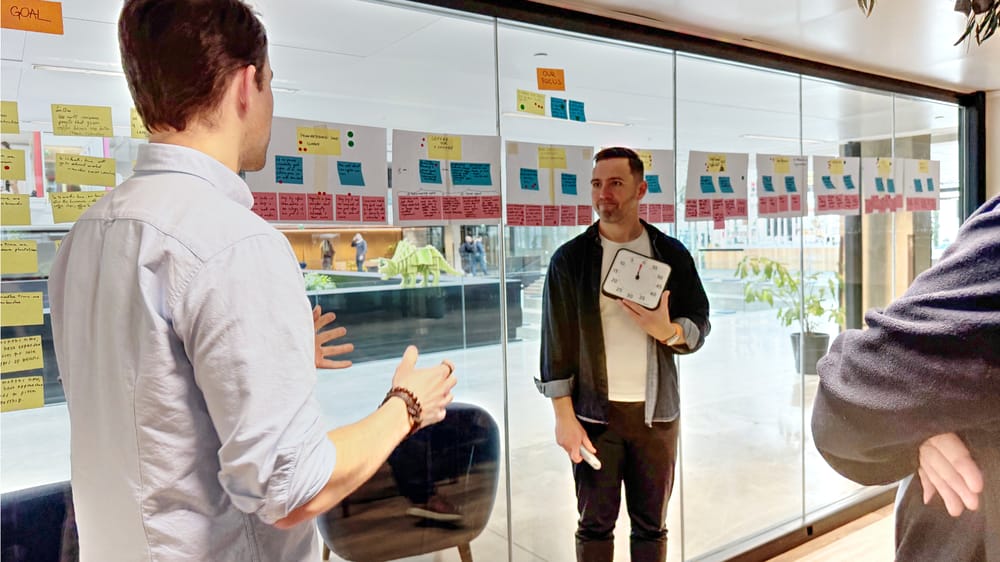
In a business context, facilitation can be described as a strategic process where a non-biased and neutral figure, the facilitator, guides a group of people through a structured process (often termed a workshop) to achieve a specific objective. This could be solving a complex problem, making an intricate decision, or brainstorming groundbreaking ideas.
The beauty of facilitation lies in its capacity to ensure every voice in the room gets a fair chance to be heard, cultivating a space where collaborative decision-making thrives. When facilitation is done right, ideas are balanced and synthesized into actionable plans.
Facilitation solves major organizational problems like broken collaboration, skewed group dynamics, and unproductive meetings. It helps an organization chart a practicable and sustainable course from problem statement to project implementation.
Why Facilitation is the Skill of the Future
Facilitation skills are rapidly becoming some of the most sought-after in the professional world. According to the World Economic Forum, they are one of the top skills for the future. With collaboration and innovation becoming mainstays in the modern workplace, the ability to navigate group dynamics and guide teams toward shared objectives becomes invaluable.
McKinsey recently conducted an elaborate survey on the necessary skills required by the average employee to thrive in the workplace of the future. They found that many of the skills that make employees stand out today will get phased out by artificial intelligence in the near future.
However, all the skill sets required for expert facilitation are soft and will be poorly replicated technologically. Soft skills like empathy, conflict resolution, structured problem-solving, collaborative intelligence, and adaptability cannot be easily replicated by AI systems. So, if you intend to future-proof your career, developing facilitation skills is the way to go.
Common Misconceptions About Facilitation
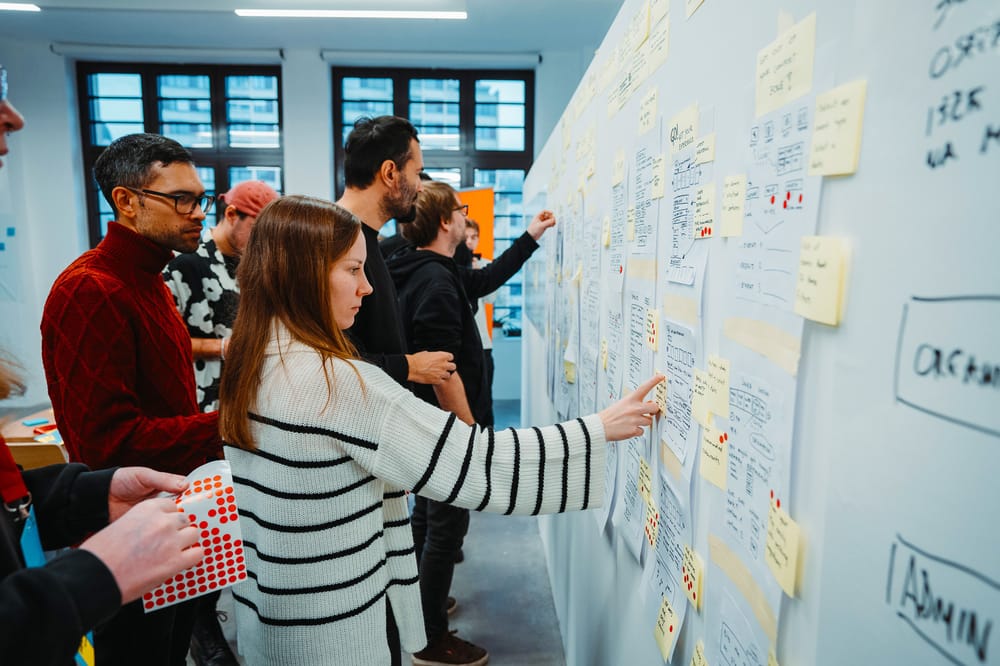
There are quite a number of misconceptions about facilitation today, and it’s perhaps why many workshops do not result in the desired outcomes. Let’s explore some of these misconceptions:
Myth 1: Facilitators take decisions
Contrary to some beliefs, facilitators do not impose decisions; instead, they guide discussions. The primary role of a facilitator isn’t to make decisions for the group but to help the group make informed decisions by providing structure and clarity.
Myth 2: Facilitation is just for meetings
While meetings are a prime playground for facilitators, the principles of facilitation extend far beyond meetings. Be it workshops, team-building exercises, or even conflict resolution, facilitation can help achieve the desired outcomes wherever collaboration is paramount.
Myth 3: Facilitation is only for large groups
Facilitation isn’t just for large groups or corporate settings. Even small teams or personal projects can benefit from facilitation.
Myth 4: Facilitators are only extroverts
It’s a common misconception that only extroverts can be good facilitators. That’s simply not true. In fact, introverts have excellent observation skills that allow them to quickly pick up on the group dynamics and individual personalities of the participants. This allows them to facilitate discussions in a way that is respectful and inclusive of everyone's opinions.
Grow into a trusted, in-demand facilitator
The Need for Facilitation Across Teams and Organizations
If you’ve been in a meeting that seemed endless or in a project where the team was moving in circles, you most likely understand the need for facilitation.
Every team, regardless of the size or type, needs someone skilled in guiding conversations, steering clear of pitfalls, and ensuring productive outcomes.
Here are some compelling reasons why a facilitator can make a significant difference in your team or organization:
Lacking a Clear Process
In situations where you have a substantial initiative to kick off, a complex problem to solve, or an important idea to develop, but you lack a defined process or approach, a facilitator can be your guiding light. They bring the expertise to help you identify the most productive course of action and provide you with a clear, structured path to follow.
Ensuring Equal Participation
An unfacilitated meetings and workshops, there's often a risk of uneven participation. Dominant voices can overshadow quieter team members, stifling their valuable input. A skilled facilitator can help balance this, creating a safe and inclusive environment where everyone feels encouraged to contribute.

Translating Talk into Action
If your meetings and workshops often devolve into endless discussions with little tangible action, a proficient facilitator can help your team break free from old habits and adopt new, action-oriented collaboration methods.
In essence, a skilled facilitator will guide your team’s collaboration, helping you navigate challenges, seize opportunities, and ultimately achieve your goals with clarity and unity.

Getting Started with Facilitation
Now that we’ve established the importance of facilitation across teams and organizations, let’s look at how to get started with facilitation. If you're keen to hone your facilitation skills, start with these:
- Educate Yourself: Begin by learning the foundational principles of facilitation. There are plenty of books, online courses, and workshops dedicated to facilitation skills. Familiarize yourself with popular facilitation frameworks and key concepts such as active listening, neutrality, and consensus-building.
- Get the Right Tools: Invest in a set of facilitation tools to aid in your sessions. Some commonly used tools include flip charts, post-it notes, timers, and digital collaboration platforms like Miro or MURAL. Also, familiarize yourself with workshop recipes such as Design Sprint, Problem Framer, Decision Jam, etc.
- Seek Out Mentors: One of the most effective ways to grow as a facilitator is to learn from those who have extensive experience in the field. Connect with seasoned facilitators who can offer guidance, insights, and feedback on your technique.
- Practice, practice, practice: Like any skill, facilitation improves with consistent practice. Start by facilitating small group discussions or workshops and gradually take on larger, more complex sessions. With each session, you'll become more confident in managing group dynamics, guiding conversations, and handling unexpected challenges.
Design and run high-impact workshops
Improve Your Team’s Collaboration With Facilitation Training
Facilitation isn’t just about managing a group or a meeting. It’s about nurturing an environment where collaboration flourishes, decisions are made effectively, and the best results are achieved collectively.
As we look to the future, the role of a facilitator becomes more important than ever, and facilitation skills become invaluable. So, if you want your team or organization to stay ahead of the curve, now's the time to invest in learning and mastering the art of facilitation.
Interested in upskilling your team with facilitation training? Sign up and be informed for the next in-person or virtual event.
Join Our Free Resources Newsletter
Join the Human1st newsletter to get free Facilitation tools, news, methods and resources right to your inbox.


© Copyright 2026 Human1st