Join Human1st newsletter
Get free Facilitation tools, news, methods and resources right to your inbox.

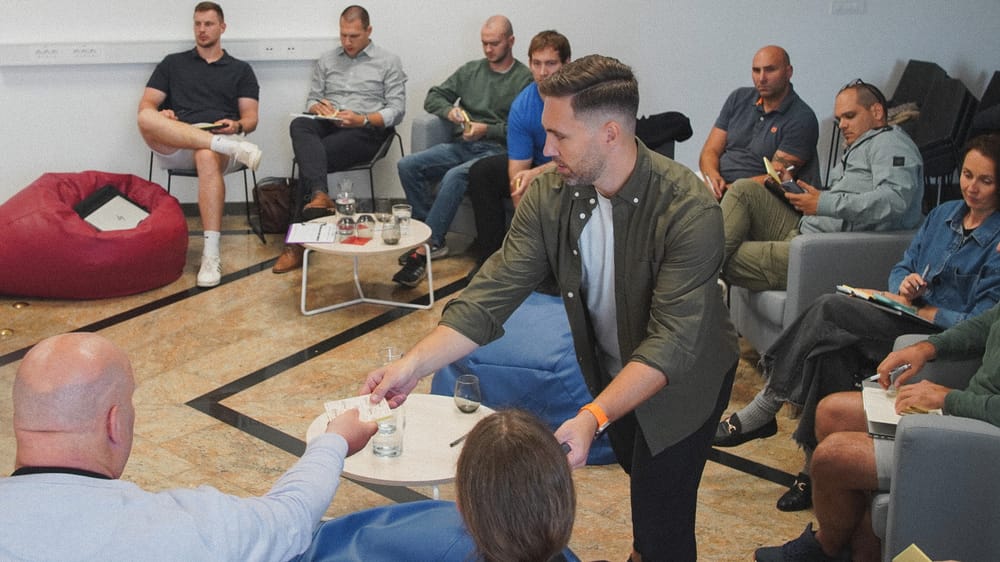
Want more clients without more hours? But your calendar is full of 1-on-1 coaching sessions and you've run out of time. Group coaching is how you win more impact, time, and income in the same session.
What's the catch? Now you talk to 1 person, but in a group 6+ people are talking, and it gets messy.
That's the facilitator vs coach gap, and facilitation fixes it. Here are 8 facilitation outcomes that help you win with a group, and where to start.
Facilitator vs coach: what's similar and what's different?
Coaches and facilitators work in a similar way. Both stay neutral. Both ask questions and listen. Both leave the answer to the people.
The difference is time. A coach helps people grow and reach a result over time. A facilitator helps a group reach a result in 1 session.
Why go beyond 1-on-1 with facilitation?
When you have a coaching session with 1 person, you give them your whole attention. You have 5 sessions a day at most, every day. That's great for these people, because they get great results.
The downside, though, is that pretty quickly you run out of time. You know, you hit your ceiling really fast, and it's unscalable. So it's good for them, not so good for you.
On the other end, you have group coaching, which works differently. It's great for you because it doesn't take too much of your time. You use facilitation to run structured sessions and move the whole group at once. That gets you more time, income, and impact.
The people in the group get your expertise, and even more:
- All work on the problem, so they get more views and solutions.
- All hear everything, so they leave on the same page.
- All help build the answer, so they want to act on it.
3 group coaching problems you fix with facilitation
When you start coaching groups it gets harder, because a group isn't 1 conversation. It's 6.
- Only a few people talk. Your question reaches whoever answers first. The rest nod, or keep their doubts for the hallway.
- The group goes in circles. More questions bring more talk, but the group isn't moving forward. So the time runs out, and 1 session can end with no answer or change.
- The session has no structure. People guess the rules, and that pulls attention away from the goal and wastes time and energy.
That's where facilitation comes in.
Learn how to lead high-stakes workshops
8 facilitation outcomes that help you win with a group
In group coaching, you win when the group makes progress. Here are 8 facilitation outcomes that get it there.
1. You hear from everyone, not just a few
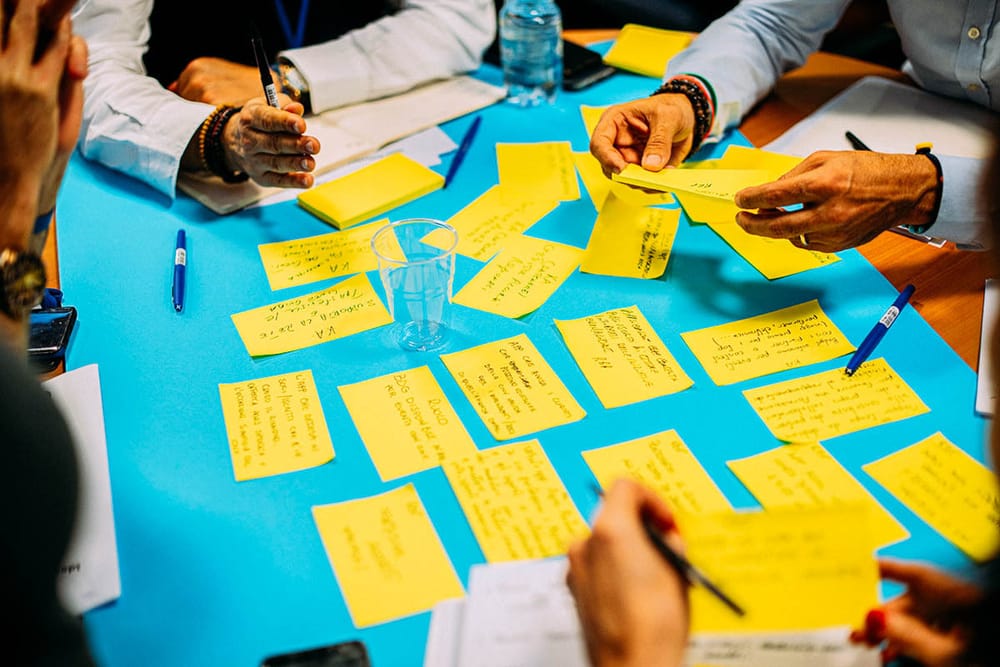
Instead of asking out loud, ask everyone to write alone and in silence. This gives them space and time to think uninterrupted. Then everyone shares, and this gets the group to expand their perspective.
2. You hear what people really think
Many people won't name a problem in front of the boss or others. Ask everyone to write on a sticky note why the project failed. Then read the notes out loud, with no names.

3. You stop the loud voice from steering the answer
The first voice in a room sets the direction. When everyone writes before anyone talks, you hear every answer before the argument starts.
4. You move the group faster, and stay neutral
A set process moves the group, so you don't have to push. Say the plan out loud: "We have 10 minutes to write the solutions. Then we rank them and pick 2." You never pick a side, and the group still gets there fast.
5. You show it, so the group gets it
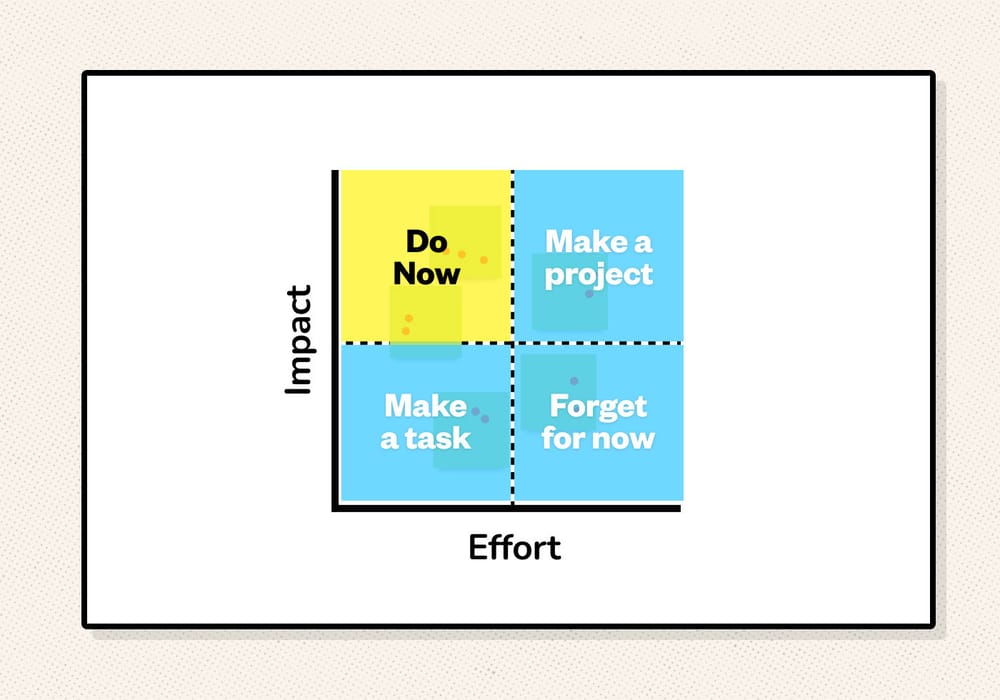
Asking a team what "priority" means takes a long time. Drawing a simple grid and placing 2 of their real tasks on it takes a minute. People understand what they can see.
Real examples on the wall beat any explanation.
6. You keep the energy up
Groups energy goes up and down. After lunch, the energy drops. During a hard topic, it spikes. With the right tools, you can steer it: a short break, a stand-up stretch, or music while people write.
7. You stop the loop, and the group still owns the answer
When a group loops, you have tools.
Put the side topic on a flipchart and say, "We'll come back to this." Seeing it on the wall saves energy, since people don't need to keep it in their heads.
Set a timer. When progress stalls, say, "Let's decide now," and move on.
8. You're ready when things go wrong
Before the session, ask yourself what could derail it. For example, there may be a loud person in the group who wants to take over, a key person may be missing, or you may need to cut time.
Then have a plan B for each one. That is why a facilitated session feels focused.
That's how you win with a group.

Want to learn how, step by step?
Join the facilitation training waitlist. It teaches you to end every session with answers and who does what by when.
Where to start
Read these. Each one adds a piece.
- What Is Facilitation? : the basics, in plain words.
- What Is a Facilitator? : what the role is, and how it differs from a coach, a moderator, and a consultant.
- Facilitation Skills: the skills of a good facilitator.
- How to Plan a Workshop: how to prepare, and what to do when things go wrong.
- A deciding problem, not a talking problem: why most teams get stuck, and what fixes it.
To try a ready-made format, look at a Decision Jam.
Learn to run high-impact workshops
Join Our Free Resources Newsletter
Join the Human1st newsletter to get free Facilitation tools, news, methods and resources right to your inbox.


© Copyright 2026 Human1st