Join Human1st newsletter
Get free Facilitation tools, news, methods and resources right to your inbox.

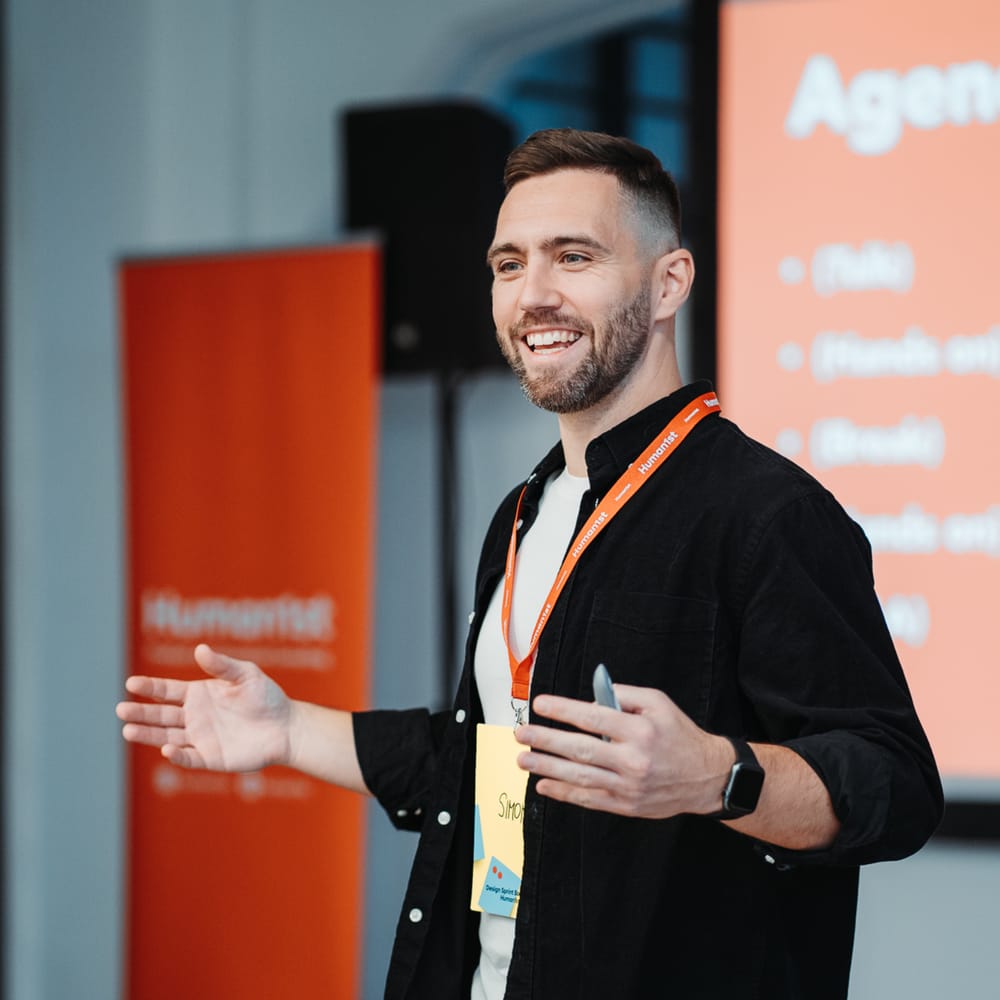
So, what is a facilitator, and what do they do? A facilitator is someone who guides teams to work together, solve problems, and make decisions. They help groups do their best work much faster than they could on their own.
If you're wondering about the 10 things a great facilitator does, you're in the right place. We'll also cover 5 things they never do, and how this role differs from a coach, consultant, trainer, moderator, or mediator.
What is a facilitator?
Most definitions say a facilitator "makes things easier for a group." That's true, but easier isn't the main point. The point is to help the group figure out what to decide, make the choice, and stick with it. This way, the team does its best work, faster than it would alone.
A facilitator guides a group through a meeting or workshop so they reach a solid decision. They plan the steps, ask questions, keep time, and make sure everyone is heard. They don't decide for the group.
A facilitator isn't the usual meeting leader. A normal meeting leader talks, argues a point, and decides.
Think of a facilitator like Gandalf in The Lord of the Rings. They're the guide, not the hero. The group is the hero.
Here's how I check my own work. Before a session, I ask how long a decision has been stuck. I also ask how many meetings it has already taken. Then I compare.
Did the team decide in 1 day what it couldn't settle in 3 months? Does the decision still hold a month later? If both are yes, that's the difference I helped make.

What does a facilitator do? 10 things
A facilitator does 10 things. Most of the work happens before a session starts or after it ends. The session itself takes the most energy, but it's also the most rewarding part.
Number 1 is the main rule behind the other 9. The rest go in order from the first planning call to the follow-up:
- Owns the process, not the content: Guides how the group solves problems and makes decisions. They don't push their own opinion.
- Finds out why: Asks the leader what the session is for and what they expect. They talk to the team, too.
- Plans the session: Builds the agenda and prepares for what might go wrong. Having a plan isn't the same as being ready for anything.
- Sets the ground rules: Gets the group to agree on how they'll work together to reach the goal.
- Gets everyone's input: Stops loud voices from taking over and brings in quiet ones. More voices mean more good ideas.
- Keeps time and focus: Keeps each step on time. They kindly stop side topics and discussions that go in circles.
- Adjusts the plan: Changes the plan when the group is tired, confused, or ready to decide early.
- Handles conflict: Lets people disagree about ideas, not each other. They plan for this tension before the session.
- Gets the group to decide: Helps the group make hard choices. They put options side by side and make sure the decider is in the room.
- Turns decisions into action: Makes it clear who does what after the session, and by what date.
1. Owns the Process, Not the Content
A facilitator isn't there to have the best idea in the room. Their job is how the group decides, not what it decides. The process belongs to the facilitator. This includes the steps, the timing, the questions, and how the group decides.
The content belongs to the group. This includes the facts, the ideas, and the final choice. Everything below follows this rule.
The International Association of Facilitators puts it the same way in its code of ethics: "stewardship of process and impartiality toward content."
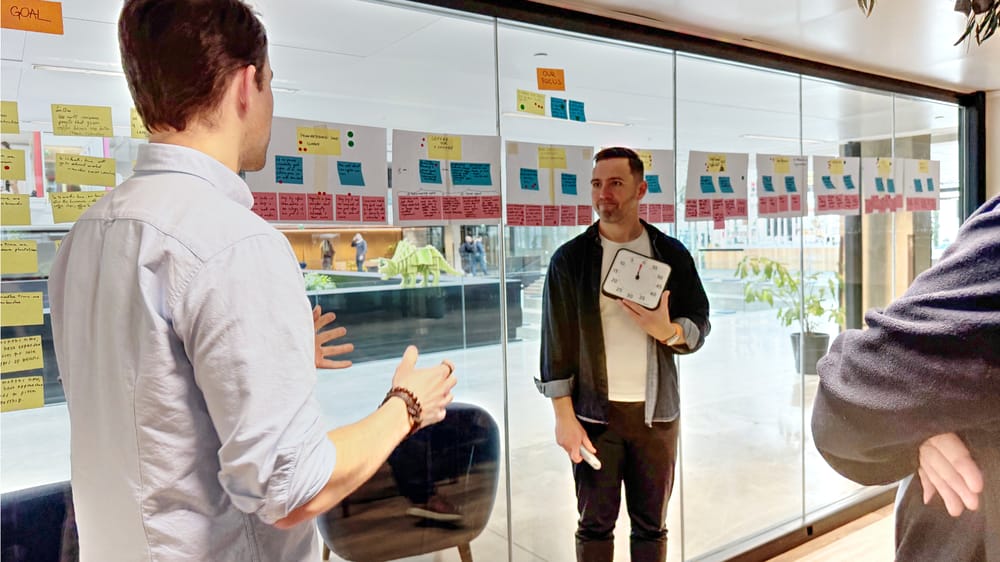
Does the facilitator need to know the industry? No. A facilitator can work in any field.
They don't need to know the product better than the team. They need to know how to get the team's ideas out in the open.
I came to this job from design, not from my clients' industries. It helps to know enough to follow the talk, but an outside view is great. You can ask obvious questions that the insiders stopped asking years ago.
I once helped a waste management company. I knew nothing about the industry, but it still worked. They knew the business. I knew how to get their knowledge on the wall to make a decision.
What if the facilitator is also an expert? This happens to in-house leaders and consultants all the time. They should say out loud which role they're playing, and when they switch.
Once, a question came up in a session. There was no time to find an expert. I told the group I was stepping out of my facilitator role to give my opinion. Then I said, "Okay, now I'm back to facilitating," and we carried on.
Read more about the split in What Is Facilitation?
2. Finds Out Why
Before a facilitator plans anything, they ask the leader what the session is for. What should exist at the end that doesn't exist now? Who needs to be there? What happens after the session?
They also run surveys and interviews with the people who will attend. Asking a lot of questions is the job. That's how they find out what everyone expects.
I end every interview by asking, "What haven't I asked you about yet?" Once, the answer was, "By the way, half the team won't be here." Because I asked, I was able to make the whole session remote.
The rest of my questions are in How to Plan a Workshop.
3. Plans The Session
Next, the facilitator turns the goal into steps, giving each one a time limit. They usually start with a template, but they never stop there. They look at the situation, change the template, cut exercises that don't fit, and add new ones if needed.
The agenda is the plan. Being prepared is everything around it. Remote and in-person sessions need different kinds of prep.
What if there's no whiteboard, or the WiFi is down? I bring my own whiteboard paper. If the WiFi drops, I use a flipchart instead of slides.
A lot of what I prepare never gets used, and that's okay. Expert facilitators aren't only good at fixing things when they go wrong. They're good at stopping problems before they start.
Learn to run high-impact workshops
4. Sets The Ground Rules
Ground rules are simple rules a group agrees to follow. This helps everyone work as fast and well as possible.
At the start, I show the group 3 things:
- What we're working toward: The final goal we want to reach today.
- The agenda: A basic outline of the meeting so everyone knows what's next.
- How we'll work: A few rules that keep us moving, like "progress over perfection."
Then the group agrees to the rules and can add their own.
5. Gets everyone's input
Nobody gets to take over the talk. Your job title doesn't buy you more speaking time, even if you're the boss. The quiet expert gets as much time as the loud manager.
My favorite trick is simple. First, everyone writes their ideas down alone, with no talking. I play music while they write.
Then, each person reads their ideas out loud, one by one. Writing first means no one copies the first idea they hear.
More ways to do it are in Facilitation Skills.
6. Keeps Time and Focus
Every step gets a strict time limit. When the talk drifts or goes in circles, the facilitator brings it back to the main goal. They might say, "Good point. Let's write it on the flipchart so we don't forget it."
They also decide before the session which exercises to shorten if time runs out.

7. Adjusts The Plan to The Group
People lose energy after lunch. In a long session, it drops fast. A facilitator plans for this by using shorter exercises and long breaks. They always put the hardest decisions in the morning.
But the plan is only a guess. In the room, they watch for 4 signs: people checking phones, a quiet room, a confused group, or a group ready to decide early.
Then they change the plan. If the group is ready, they skip the next step and go straight to the vote. If energy is low, they add a quick break. If the group is focused, they skip the extra breaks.
I don't make these moves up on the spot. I prepare for them before the session. Once I'm in the room, I pick which one to use.
Once, a team got confused. Everyone understood the facts differently. So I changed the plan.
Instead of making a chart with them, I drew one for them based on our earlier talks. When they saw it, no one had to repeat themselves. They only spoke up if something was missing. That cut the talking time in half.
8. Handles Conflict
Disagreeing is useful. Fighting is not. In the room, they keep arguments focused on ideas, not people. They ask each person to explain their view so everyone understands the differences.
Most of this work happens before the session. If 2 people have strong, opposite views, I usually hear about it in the interviews. I know what they'll disagree on, and I plan how to handle it.
When someone seems "difficult," it's usually because we missed something. They might have stress, tension with a teammate, or too much work. So, I handle it with kindness and respect.
9. Gets The Group To Decide
Every discussion ends with a choice. This could be a vote, a ranking, or a leader making the final call in front of everyone. Before anyone votes, the facilitator puts all the options side by side.
The final decider must be in the room. The facilitator asks them to clear their calendar. If the decider has another meeting, the facilitator plans around it.
Our Decision Jam is a short, simple workshop you can use to try this.
Learn how to lead high-stakes workshops
10. Turns Decisions Into Action
Every decision leaves the room with an owner and a due date. Within a day, the facilitator sends the final choices and next steps to everyone who attended.
They also plan what happens next. For one client, the ideas were going straight to the computer engineers. Sticky notes wouldn't work, so we ended the meeting with sketched screens instead.
What a facilitator doesn't do
A facilitator doesn't decide for the group, bring the answer, or take sides. They don't do most of the talking, and they don't let the loudest person win. People often expect the person at the front of the room to do these things. But doing any of them turns a great workshop back into a boring meeting.
- Decide for the group: The person who owns the decision makes it. Facilitators make sure they have what they need to make a good choice.
- Bring the answer: Even if the facilitator knows the topic, they let the group answer. If they do share an idea, it gets treated like everyone else's.
- Take sides: The moment the room thinks the facilitator has a favorite option, the other side will stop talking.
- Do most of the talking: If the facilitator is talking more than the group, something is wrong.
- Let the loudest person win: Silent writing and voting on paper give quiet people the same power as loud people.
A client once expected me to bring the perfect answer to their problem. Instead, I invited an expert into the session. The expert gave the team a new point of view, which made the decision easier. I stayed neutral and helped them choose.
Facilitator vs. coach, consultant, trainer, moderator, and mediator
A facilitator helps a group reach its own decision. A mediator helps 2 sides settle a dispute, a moderator runs a panel or discussion, and a trainer teaches content they bring. A coach or an interviewer works with 1 person, and a consultant gives expert advice. The roles overlap, and the big difference is who brings the answer.
| Role | Works with | Who brings the answer | Outcome |
|---|---|---|---|
| Facilitator | A group | The group | The group decides and commits |
| Mediator | 2 sides in a dispute | The 2 sides | Both sides reach an agreement they can live with |
| Moderator | A panel, a forum, a debate | The speakers | The discussion stays fair and on time |
| Trainer | Learners | The trainer | People can do something new |
| Coach | 1 person | The person being coached | The person takes their next step |
| Interviewer | 1 person | The person being interviewed | You learn what they know and think |
| Consultant | 1 person or a team | The consultant | The client gets expert advice |
Most good consultants switch between consultant and facilitator in the same project. The best ones tell the client when they switch.
Is a facilitator a job title, a role, or a business?
It's all 3. Some facilitators run their own business and are hired for the day.
Many others are team leaders, project managers, or consultants. They facilitate as part of their normal job. The skills are the same.
The Strategic Facilitator
I call myself a strategic facilitator. This means I help leaders decide what to work on, not just how to run the meeting. As computers and AI take over more everyday tasks, companies still need humans to make the big choices (I talk more about this in Skills AI Can't Replace).
It's a move from taking orders to being a true partner. People don't pay for the workshop itself. They pay for the great decisions it creates.
So, own the process, leave the answers to the group, and prepare for what could go wrong!
FAQ
What is the role of a facilitator?
The role of a facilitator is to help a group reach a decision it will stick with. In practice, that means planning the session and setting rules. It also means getting everyone's input, keeping time, and handling conflict. The facilitator owns how the group works, and the group owns what it decides.
Is a facilitator a teacher?
No, although the roles overlap. A teacher or trainer brings knowledge and helps people learn it. A facilitator draws knowledge out of the group and helps them use it to decide. Many trainers facilitate parts of a session, like a group exercise, and many facilitators teach a method before using it.
What is a meeting facilitator?
A meeting facilitator is the person who runs a meeting so it reaches its goal. They put the main question at the top of the agenda and keep each item on time. They make sure everyone speaks and end the meeting with clear choices, owners, and due dates.
Can a manager facilitate their own team's meeting?
Yes, if they're clear about which hat they're wearing. A manager can say, "For this part, I'm only running the process, and my opinion comes last." This is much harder when the manager has a strong view. If the team needs to push back safely, bring in an outside facilitator.
Join Our Free Resources Newsletter
Join the Human1st newsletter to get free Facilitation tools, news, methods and resources right to your inbox.


© Copyright 2026 Human1st